Valto — Keep ahead of tomorrow

News

Microsoft Copilot Wave 2

This blog article explores the exciting new features introduced in Microsoft Copilot Wave 2, providing insights into how they enhance productivity and streamline user experience.

Published
16 September 2024
Microsoft Copilot Wave 2 Updates

NEW FEATURES with Microsoft Copilot Wave 2

This blog article explores the exciting new features introduced in Microsoft Copilot Wave 2, providing insights into how they enhance productivity and streamline user experience.

Start by watching this video on Copilot Pages, as the announcements include new products, features, and the general release of multiple Copilot solutions designed to boost efficiency across various platforms.

Watch the video (opens in a new tab)

Microsoft Copilot Wave 2 Announces: PowerPoint Narrative Builder

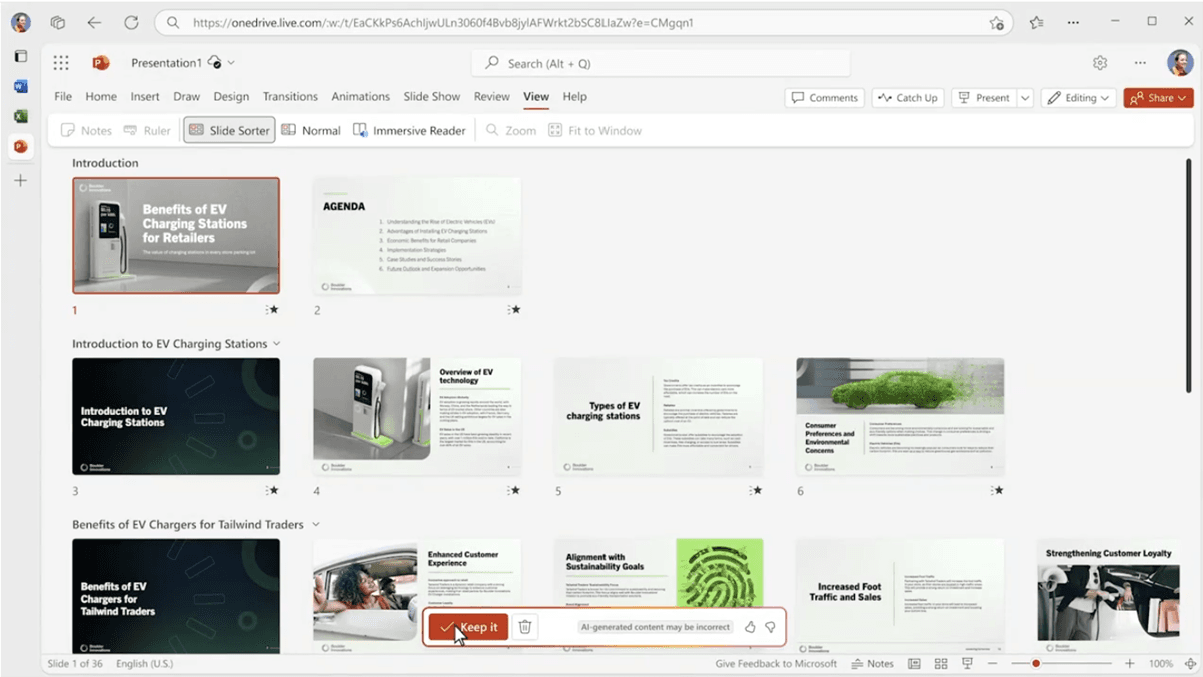
Microsoft’s Copilot Narrative Builder is an exciting new feature in PowerPoint, designed to revolutionize how presentations are created by offering a more streamlined and intelligent process. This feature, part of the Microsoft 365 Copilot suite, leverages the power of AI to help users build a strong foundation for their presentations, making it easier to organize ideas and create content that is cohesive and well-structured.

At its core, the Copilot Narrative Builder allows users to draft a high-level outline or “narrative” of their presentation before PowerPoint automatically generates the slides for them. Traditionally, building a presentation requires manually creating slides one by one, adding content, adjusting layouts, and ensuring consistency across the entire deck. This process can be time-consuming, especially when working on complex topics or large presentations that require a lot of research, planning, and referencing external materials.

With Copilot Narrative Builder, users can focus on outlining what should be included in the presentation without worrying about the actual slide creation until later. You start by working within a narrative drafting tool in PowerPoint, where you can define key themes, structure, and goals for your presentation. As you create this draft, you can describe the major points or sections of your presentation, and Copilot helps refine it by suggesting ways to organize and expand on your ideas.

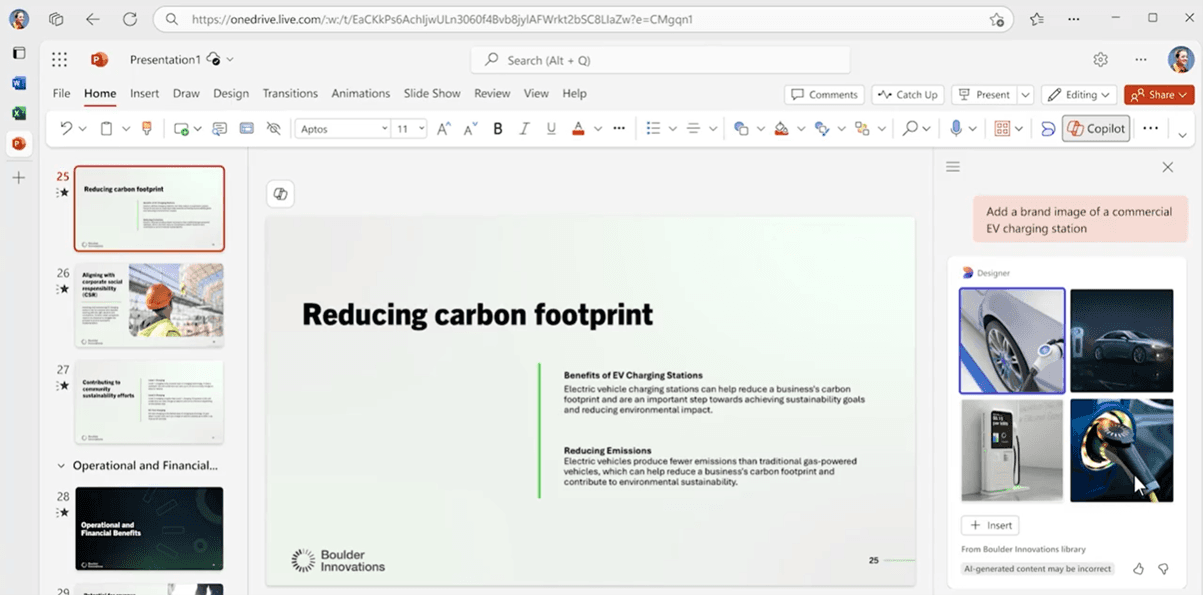
Microsoft Copilot Wave 2 Announces Copilot for OneDrive

Microsoft has introduced new Copilot features in OneDrive that make document comparison more intuitive and efficient. These enhancements use AI to help users quickly identify which document best fits their needs by allowing them to compare files side by side, even when there are subtle differences between them.

In many cases, users often find themselves managing multiple versions of similar documents—such as drafts of a report, presentations, or project files. With the new Copilot document comparison feature in OneDrive, you can easily see how these documents differ. Instead of manually going through each version, Copilot does the heavy lifting by highlighting key differences, such as changes in content, formatting, or structure. This makes it easier to identify which document contains the most relevant information, saving time and reducing the risk of errors.

What makes this feature especially useful is its ability to pull from the broader Microsoft ecosystem. For example, if you’re unsure which document is most up-to-date or contains the required content, Copilot can intelligently scan and compare files stored across OneDrive, SharePoint, or even email attachments in Outlook. This capability ensures that you have a comprehensive view of all available versions and can make an informed decision on which document to work with.

Priority emails with Copilot for Outlook

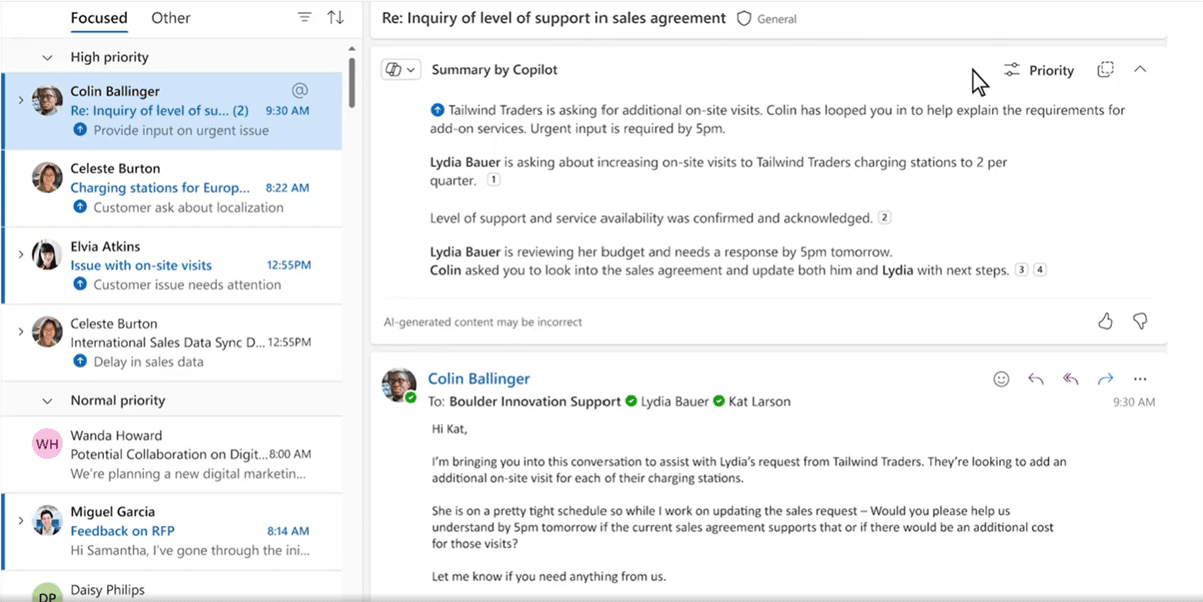
Microsoft Outlook’s new Copilot Priority feature uses AI to automatically determine the importance of your emails, helping users manage their inbox more efficiently. This tool goes beyond simple rules-based sorting by learning from your behavior and feedback, adapting to how you prioritize communication.

At the heart of the Copilot Priority feature is its ability to analyze incoming emails and assign a level of priority based on factors such as the sender, content, and urgency. For instance, it can recognize emails from your boss or team as high-priority or flag urgent requests and deadlines that need immediate attention. This automatic sorting helps reduce the clutter of less important emails, ensuring that what matters most rises to the top.

One of the standout aspects of this feature is that you can coach Copilot, teaching it why certain emails are more or less important to you. For example, if Copilot incorrectly labels an email as high priority, you can tell it why the message is actually lower on your list. Over time, Copilot learns from these adjustments, fine-tuning its understanding of your personal email preferences and becoming smarter at prioritizing messages.

Microsoft Copilot for OneDrive comparing details
Microsoft Copilot Wave 2 Updates

Microsoft Copilot Wave 2 announces Copilot Agents!

Copilot Agents are a powerful new feature designed to handle specific tasks and streamline workflows, making them particularly useful in industries like field services. These agents can act as first-line support for field workers who encounter issues while on the job. Instead of calling back to the office or searching for answers manually, field workers can ask the Copilot Agent for help. The agent draws from various knowledge bases, such as SharePoint or Dynamics 365, to provide relevant, accurate information on the spot. One of the standout features of Copilot Agents is their ability to have memory of previous interactions. This means that if a field worker has asked the same or a similar question before, the agent can reference past responses, making it faster and more efficient to get the right answer. This capability also allows agents to offer more personalized support, understanding common issues that may arise and responding accordingly. Additionally, Copilot Agents can control other agents, creating a network of interconnected AI tools that can handle more complex problems or processes. For example, if a field worker asks an agent to solve an issue beyond its scope, it can pass the task to another agent specialized in that area. This agent-to-agent collaboration helps scale support teams quickly and ensures that the right tools are always available for every task. The simplicity of connecting Copilot Agents to data sources makes them highly adaptable and easy to integrate into existing systems. With a few clicks, agents can access company knowledge stored in platforms like SharePoint or data in Dynamics 365, ensuring that the information provided is always up-to-date and relevant. By automating routine support tasks and giving field workers quick access to critical information, Copilot Agents empower teams to be more responsive and efficient, enabling organizations to scale quickly without overburdening their workforce. Do you want to deploy this to your business? Speak to our Copilot Consultants today!

Microsoft Copilot Pages

Today, Microsoft introduced Copilot Pages, a new tool in our design system for knowledge work. Copilot Pages is an interactive canvas built into Copilot chat that allows multiple people to collaborate with AI in real time. With Pages, you can take Copilot’s helpful responses and turn them into something you can edit, save, and share with your team. Copilot Pages is available starting today for Microsoft 365 Copilot users and will be coming soon to all Microsoft 365 subscribers.

If you have a Microsoft 365 Copilot license, you and your team can work directly on the page in full screen. You can use Copilot together, improve and expand on responses, share ideas, and organize information. Copilot Pages brings human-AI teamwork to life, transforming Copilot from a personal tool into a shared, collaborative experience.

How to use Copilot Pages:

  1. Access Copilot at Microsoft.com/Copilot. If you have an M365 Copilot license, you can also use Copilot in Teams and Outlook.
  2. Chat with Copilot as you normally would. When you get a response you’d like to keep, click “Edit in Pages.” This will open a side-by-side page with the response already formatted, including any links or code. A reference will be added in the chat.
  3. Add and refine content. Continue your conversation in the chat, and clicking “Edit in Pages” will add new responses to the page. The page is fully editable—just click to start typing. You can also use the “/” key to access a menu of content types.
  4. Share and collaborate. When you’re ready, share your page with others so they can collaborate. People you share with can view and edit the page but won’t have access to your Copilot session. If your team has a Microsoft 365 Copilot license, you can work together in full screen, adding to each other’s prompts and creating a final result. Tip: Use the share icon to copy the page into Teams or Outlook for full interactivity.
  5. Access your pages. You can return to your page anytime through the link in the chat where it was created, or by going to the Pages tab in Microsoft365.com, where all your pages are saved.

Key Features:

  • Persistent: Copilot Pages turn temporary AI-generated content into something lasting that you can edit and build on.
  • Shareable: Pages can be shared and used for dynamic collaboration in Teams chats, Outlook emails, meetings, or the Pages module in the Microsoft 365 app.
  • Multiplayer: Collaborate with your team in real-time. See everyone’s contributions and work together on refining Copilot prompts if you have a Microsoft 365 Copilot license.

Trusted by Leading Brands

Our Microsoft Copilot Consultants work with organisations across many sectors of different shapes and sizes from 10 to 100,000 employees.

Speak to Microsoft Copilot Experts

Speak to a Microsoft Copilot expert in our team today!

Talk to our team

Contact us

Share this

Related reading

News

Building the AI Foundation: Key Takeaways from Our Manchester Azure Roundtable

At our Manchester Azure Roundtable, experts from Microsoft, Infinigate Cloud, and Valto explored the foundations of successful AI adoption. Discussions covered Azure AI readiness, data strategy, security, governance, Microsoft Fabric, and the steps organisations can take to prepare for AI at scale.

4 August 2026