Valto — Keep ahead of tomorrow

News

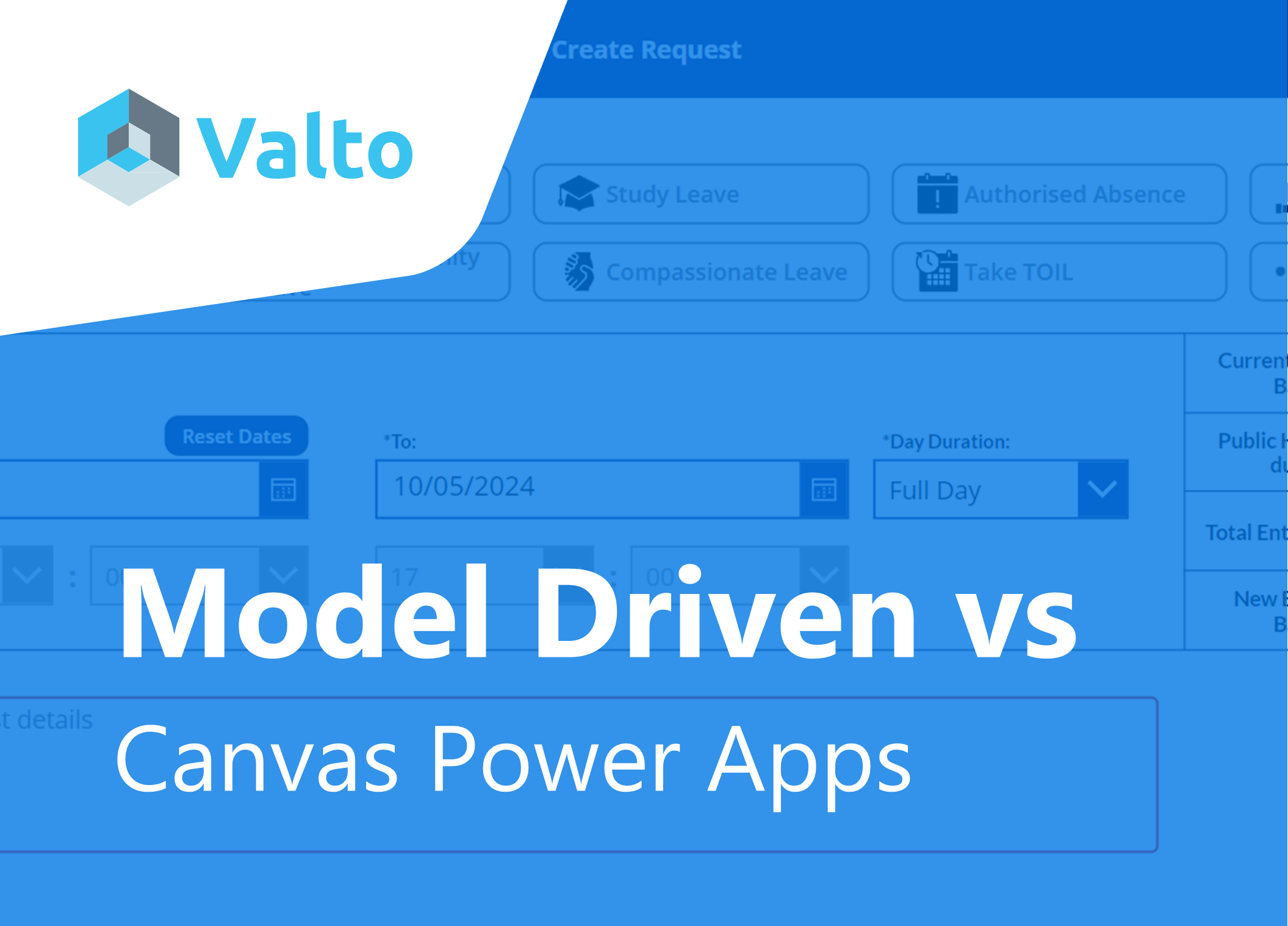
Model Driven Power Apps vs Canvas Power Apps

Microsoft Power Apps provides three distinct avenues for app development: Model Driven Power Apps, Canvas Power Apps, and Power Apps Pages. Each offers unique capabilities, and understanding their differences is essential for informed decision-making.

PowerAppsSharePoint
Published
2 May 2024
Model Driven Power Apps vs Canvas Power Apps

Model Driven Power Apps vs Canvas Power Apps

Microsoft Power Apps provides three distinct avenues for app development: Model Driven Power Apps, Canvas Power Apps, and Power Apps Pages.

Each offers unique capabilities, and understanding their differences is essential for informed decision-making. With the recent evolution of Power Apps Pages (formerly Power Apps Portals), exploring these options becomes increasingly important.

Watch our Power Apps Tutorial video to delve into each approach to grasp their functionalities and best-fit scenarios.

Watch the video (opens in a new tab)&t=28s

Model Driven Power Apps vs Canvas Power Apps

Model Driven Power Apps

Model Driven Power Apps are tailored for building data-centric applications with minimal coding. At the core of Model Driven Apps lies the Common Data Service (CDS), a secure and scalable data platform provided by Microsoft. Here are some key aspects of Model Driven Power Apps: Data-First Approach: Model Driven Apps prioritize data modeling and organization. Users define entities, relationships, and business logic within the Common Data Model (CDM), which seamlessly integrates with the CDS. This structured approach ensures data consistency and enables rapid application development. Rich Metadata: One of the distinguishing features of Model Driven Apps is the utilization of rich metadata. Metadata-driven UI components dynamically adapt to changes in data structure, reducing the need for manual adjustments. This enhances agility and facilitates iterative development cycles. Out-of-the-Box Functionality: Model Driven Apps come equipped with pre-built components such as forms, views, and dashboards, offering a ready-made framework for building applications. Developers can leverage these components to accelerate development and focus on customizing business logic rather than reinventing the wheel. Enterprise Integration: With seamless integration capabilities, Model Driven Apps can interact with other Microsoft services such as Dynamics 365, Power BI, and Office 365. This integration enables users to leverage existing data sources and workflows, fostering interoperability within the Microsoft ecosystem.

Canvas vs Model Driven Power Apps

Unlike Model Driven Apps, Canvas Power Apps provide users with a blank canvas to design highly customized applications. Here’s what sets Canvas Apps apart:

  1. Pixel-Perfect Design: Canvas Apps empower users to design pixel-perfect interfaces with complete control over layout and styling. By leveraging a wide array of UI controls and functionalities, developers can craft visually stunning applications tailored to specific user experiences.
  2. Low-Code Development: While Canvas Apps offer extensive customization capabilities, they also cater to low-code development paradigms. Users can drag and drop UI elements, define logic using a simple formula language, and connect to various data sources without extensive coding knowledge.
  3. Responsive Layouts: Canvas Apps support responsive design principles, ensuring optimal user experiences across devices and screen sizes. Developers can create adaptive layouts and implement device-specific optimizations to enhance usability and accessibility.
  4. Integration Flexibility: With connectors to hundreds of external services and APIs, Canvas Apps offer unparalleled integration flexibility. Whether integrating with cloud services, databases, or custom APIs, developers can seamlessly incorporate external functionalities into their applications.

Power Apps Pages (Formerly Power Apps Portals)

Power Apps Pages, formerly known as Power Apps Portals, serve as a gateway for external users to interact with Power Apps applications. Here’s what you need to know about Power Apps Pages:

  1. External-Facing Experience: Power Apps Pages enable organizations to create external-facing portals accessible to customers, partners, and stakeholders. Whether it’s self-service portals, customer support portals, or community forums, Power Apps Pages facilitate seamless interactions beyond organizational boundaries.
  2. Customizable Web Experiences: With a range of templates and customization options, Power Apps Pages empower organizations to create branded web experiences tailored to specific user needs. From authentication mechanisms to personalized content delivery, organizations can deliver engaging digital experiences with ease.
  3. Secure Access Control: Power Apps Pages integrate with Microsoft Azure Active Directory, enabling robust access control mechanisms. Organizations can define granular permissions, authenticate users, and enforce security policies to safeguard sensitive data and ensure regulatory compliance.
  4. Scalability and Performance: Built on Microsoft Azure, Power Apps Pages offer scalability and reliability to handle varying user loads and traffic spikes. With global availability and built-in CDN support, organizations can deliver responsive web experiences with minimal latency and downtime.

Model Driven Power Apps vs Canvas Power Apps – Our Expert Says

To sum up, our journey through Model Driven Power Apps, Canvas Power Apps, and Power Apps Pages has unveiled their unique strengths for different project needs.

Model Driven Power Apps thrive in data-centric scenarios, thanks to their structured development and handy features via the Dataverse. Meanwhile, Canvas Power Apps offer an exciting playground of flexibility, granting developers precise design control and easy customization.

And with Power Apps Pages, the party extends beyond the internal crowd, inviting collaboration with external folks. Getting to know these options is like finding the perfect tool in your toolbox, whether you’re into data integrity, creative flair, or connecting with the outside world.
Get in touch with our Power Apps experts if you need help choosing the best Power Apps.

Trusted by Leading Brands

“We work with organisations across many sectors of different shapes and sizes from 10 to 100,000 employees.”

Contact Form

Contact our team today!

Talk to our team

Contact Us

Share this

Related reading

NewsSharePoint

Mastering Document Control with SharePoint

Struggling with document versioning, policy visibility or outdated files? Learn how Valto’s SharePoint-based Controlled Documents Solution solves the most common document control challenges.

7 May 2025

Atlassian Server is end of life
NewsSharePoint

Atlassian Server is End of Life

Is your organisation still using Confluence on an unsupported version? Discover the benefits of migrating to SharePoint Online, including better security, cost savings, and seamless integration with Office 365.

22 January 2025