Valto — Keep ahead of tomorrow

News

Power Apps Date & Time Functions

Learn how to use Power Apps’ Date & Time functions to manipulate, calculate, and format date and time values in your applications. This blog includes practical examples and expert advice, helping you unlock the potential of these essential tools in Power Apps.

PowerApps
Published
21 January 2025

Power Apps Date & Time Functions

Power Apps offers a rich set of Date & Time functions that enable users to work with date and time data easily.

These functions are essential for performing calculations, managing scheduling, and formatting dates in a user-friendly way.

In this blog, we’ll dive into the various Date & Time functions that Power Apps provides, showing you practical examples and offering tips to help you get the most out of them in your applications.

What are Date & Time Functions?

Date & Time functions are used across Power Apps are used to manipulate and create date and time values to be used in your applications, allowing you to perform calculations, format dates and other date related fun.

Syntax of Date & Time Functions

There are many Date & Time functions, as such here is a breif overview of the syntax of some of the most common:

  • Date: Date(Year, Month, Day)
  • Time: Time(Hour, Minute, Second [, Milliseconds])
  • DateAdd: DateAdd(DateTime, Number, Units)
  • DateDiff: DateDiff(StartDateTime, EndDateTime, Units)
  • Now: Now()
  • Today: Today()

How to Use Date & Time Functions

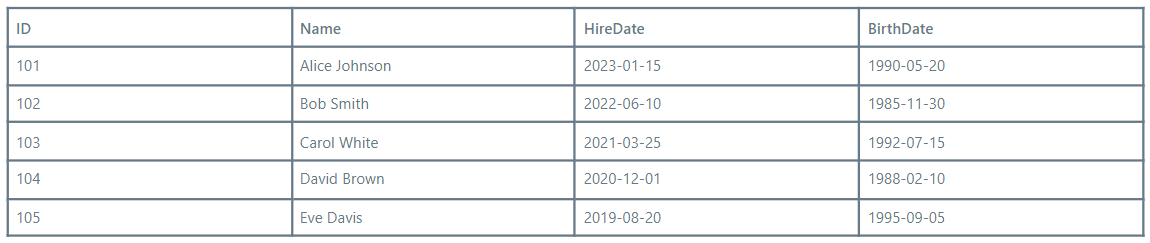
Let’s use some of these functions with practical examples. For this, we will be working off this sample data set:

Example 1: Getting the Current Date and Time

Get the current Date and Time.

Formula:
Now()

Output:
2024-12-02T20:29:11Z

Example 2: Getting Todays Date

Get todays date.

Formula:
Today()

Output:
2024-12-02

Example 3: Adding Days to a Date

Add 30 days to the HireDate of Alice Johnson:

Formula:
DateAdd(DateValue(“2023-01-15”), 30, Days)

Output:
2023-02-14

Example 4: Calculating the Difference Between Two Dates

Calculate the days between HireDate and BirthDate for Bob Smith:

Formula:
DateDiff(DateValue(“2022-06-10”), DateValue(“1985-11-30”), Days)

Output:
13384

Example 5: Creating a Date from Components

To create a date from year, month, and day components:

Formula:
Date(2024, 12, 25)

Output:
2024-12-25

Example 6: Formatting a Date

To format HireDate of Carol White as “Month Day, Year”:

Formula:
Text(DateValue(“2021-03-25”), “MMMM DD, YYYY”)

Output:
March 25, 2021

Practical Applications

Some example uses are:

  • Scheduling: Get future dates for appointments.
  • Age Calculation: Calculate the age of a person based on their birthdate.
  • Date Formatting: Output dates in a “pretty” format.
  • Time Tracking: Track the duration of tasks.

Tips for Using Date and Time Functions

  • Time Zones: Be very mindful of time zones when working with date and time values, this is a common issues that catches a lot of developers out.
  • Formatting: Use the Text function to format dates and times for display purposes.

Power Apps Date & Time Functions - Our Expert Says

Date and Time functions are often overlooked, but they’re vital in many real-world scenarios. Whether you’re building an app for managing appointments, calculating age, or even tracking project timelines, understanding these functions can greatly improve the functionality and user experience of your apps. The key is to experiment and get comfortable with how dates are stored and manipulated in Power Apps. Once you understand the syntax and use cases, you can quickly implement these functions to solve a wide variety of business problems.

Trusted by Leading Brands

“We work with organisations across many sectors of different shapes and sizes from 10 to 100,000 employees.”

Contact Form

Contact our team today!

Talk to our team

Contact Us

Topics
Share this

Related reading

NewsMicrosoft 365

Dynamics 365 vs Model Driven Power Apps

Explore how SMEs can use Microsoft Model-Driven Apps to create affordable, custom CRM-like systems. Learn how to manage customer data, track sales, automate tasks, and access powerful reporting—without the high cost of Dynamics 365.

22 January 2025

NewsPowerApps

Power Apps vs. Power Automate

Explore the differences between Power Apps and Power Automate and learn how combining them can deliver powerful, low-code solutions for businesses. Discover how these tools work together to streamline processes and improve efficiency.

21 January 2025

NewsPowerApps

Using The UpdateContext Function In Power Apps

Discover how to efficiently use the UpdateContext function in Power Apps to manage context variables, optimise memory usage, and enhance app performance. Learn best practices and practical examples for Canvas Apps.

21 January 2025