


News
Power Apps HR Portal: The Smarter Alternative to Traditional HR Software
Discover how a Power Apps HR Portal can automate HR processes, centralise employee data, improve employee self-service, and reduce reliance on expensive HR software. Learn how Microsoft Power Platform helps organisations build HR solutions tailored to their needs.
- Published
- 20 July 2026
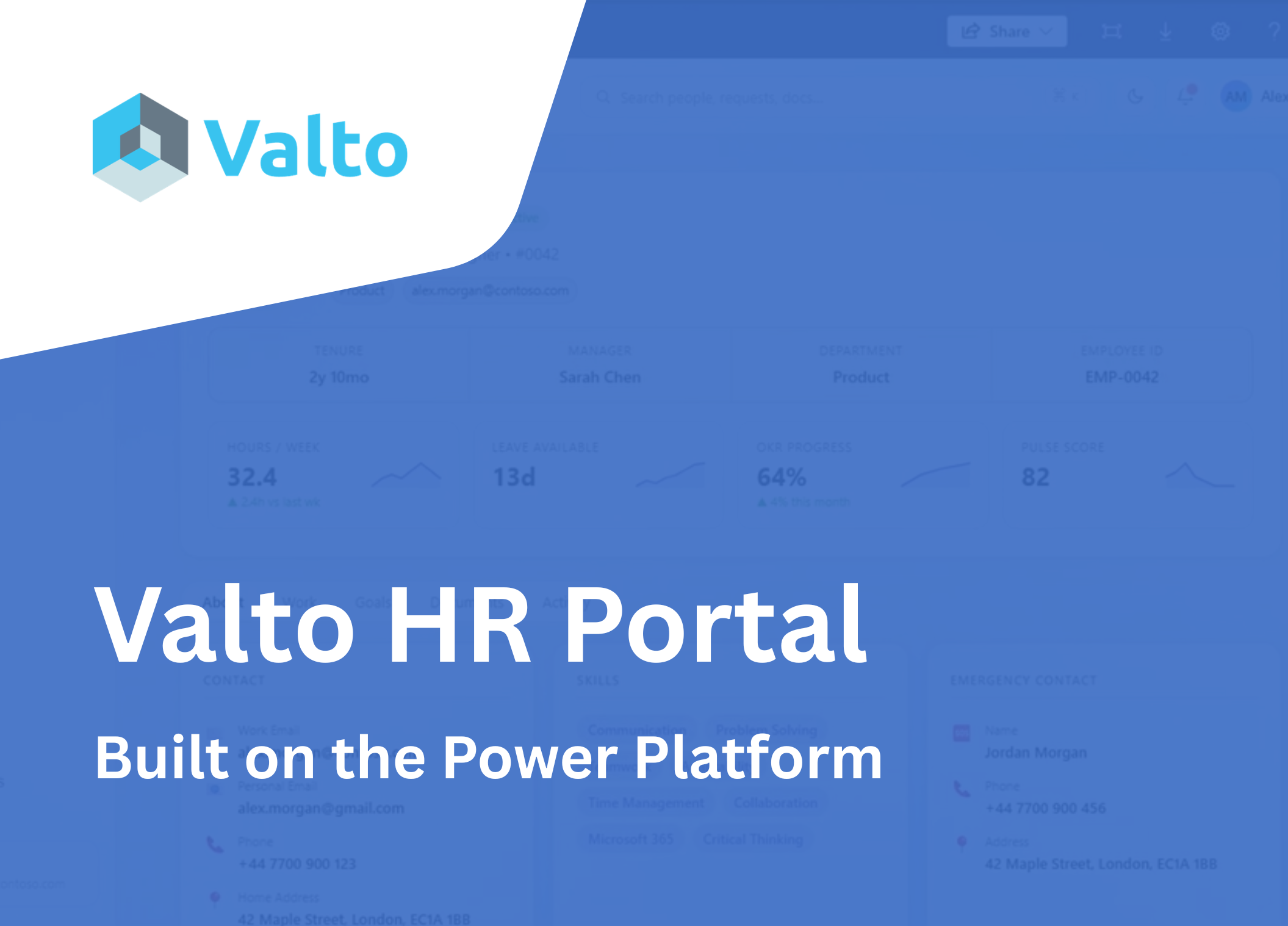
Power Apps HR Portal: The Flexible Alternative to Traditional HR Software
Traditional HR software promises to simplify people management, but many organisations find themselves paying for functionality they don't use while still relying on spreadsheets, emails, and manual processes. A Power Apps HR Portal offers a different approach, giving businesses a tailored employee self-service portal built within Microsoft 365. HR teams are under constant pressure to do more with less. They need to manage employee data, handle requests, support managers, maintain compliance, and deliver a great employee experience - all while keeping administrative overhead under control. Yet for many organisations, the systems intended to simplify these tasks often create new challenges. Expensive HR platforms can be difficult to customise, introduce complex licensing models, and force businesses to change their processes to fit the software. That's why many organisations are taking a different approach: building a custom HR portal with Microsoft Power Apps. In this article, we'll explore the common problems businesses face with traditional HR systems, how a Power Apps HR portal solves them, and why a growing number of organisations are choosing Microsoft Power Platform over off-the-shelf HR software.
Why Businesses Outgrow Traditional HR Software
For many organisations, investing in an HR platform seems like the logical next step. The demonstrations are impressive, the feature lists are extensive, and the promise of a single HR system is appealing.
The challenge often comes later.
As the platform is implemented, businesses discover that their processes don’t quite fit the software. Additional modules are needed to unlock functionality, costs increase, and employees continue using emails and spreadsheets because the system feels disconnected from how they actually work.
The issue isn’t that traditional HR software is inherently bad. Solutions such as Workday, SAP SuccessFactors, Sage People, and People XD are powerful platforms. The issue is that they’re designed to work for thousands of organisations, while your HR processes are unique to your business.
The Cost of One-Size-Fits-All HR Platforms
Many HR systems bundle together recruitment, performance management, payroll, learning management, compliance, and reporting tools into a single platform.
For large enterprises, that can make sense.
For many small and mid-sized organisations, however, it often means paying for features that never get used. Businesses that simply need leave management, employee records, onboarding workflows, and document storage can find themselves paying enterprise-level licensing fees for functionality they don’t need.
A custom-built HR portal takes a different route. Instead of buying everything on day one, you build what your organisation actually uses and expand it over time.
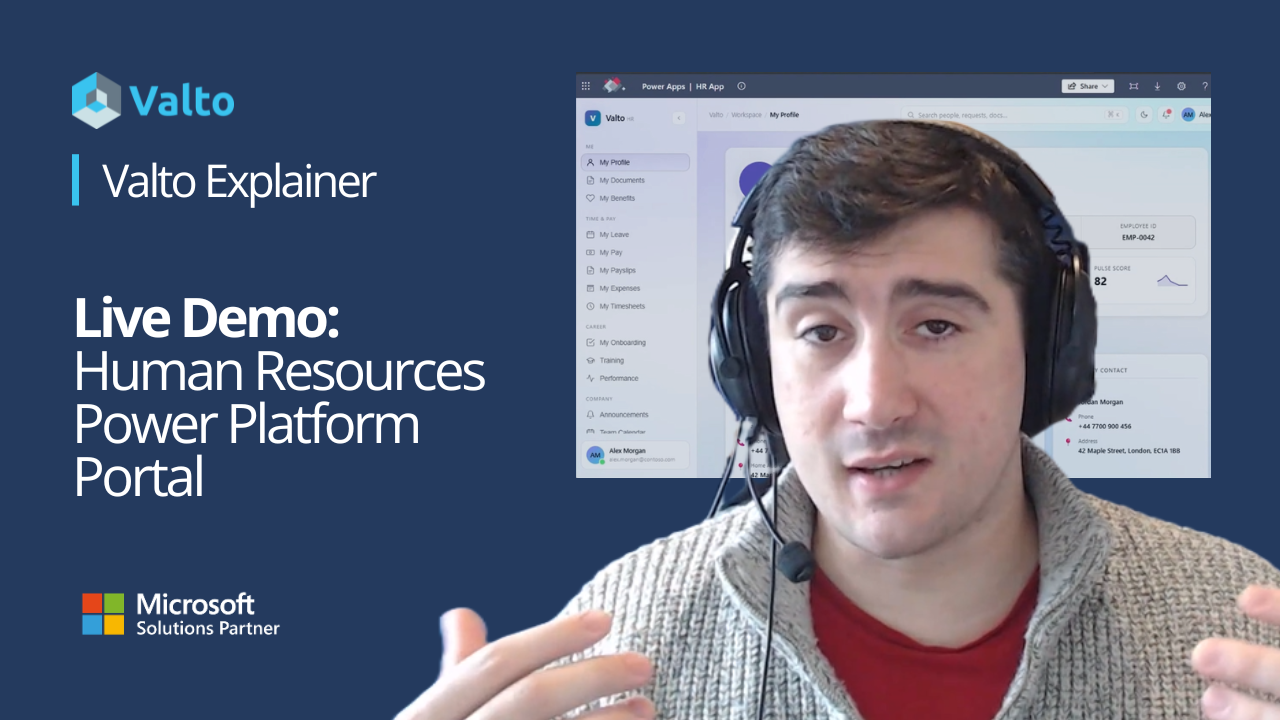
1. Build Around Your Processes
Every organisation has its own approval routes, onboarding requirements, policies, and procedures.
Most HR platforms require businesses to adapt their processes to fit the software. Power Apps works the other way around.
Whether you need multi-stage approvals, department-specific workflows, or custom onboarding journeys, your HR portal is designed around the way your organisation already operates.
The software supports the process – not the other way around.
2. Automate Approvals with Power Automate
Holiday requests, expenses, training approvals, and HR sign-offs often become trapped in inboxes.
Managers are busy. Emails get missed. Employees chase updates. HR spends valuable time following up.
By combining Power Apps with Power Automate, requests can follow a structured workflow automatically. Notifications can be sent through Microsoft Teams, reminders can be triggered when approvals are overdue, and escalation paths can ensure nothing gets stuck.
Employees also gain visibility over every request, reducing uncertainty and unnecessary follow-up emails.
3. Give Employees Self-Service Access
Many HR enquiries are repetitive:
- How much annual leave do I have left?
- Can I have a copy of my contract?
- Where can I find company policies?
- How do I update my personal details?
These requests are important but don’t always require HR involvement.
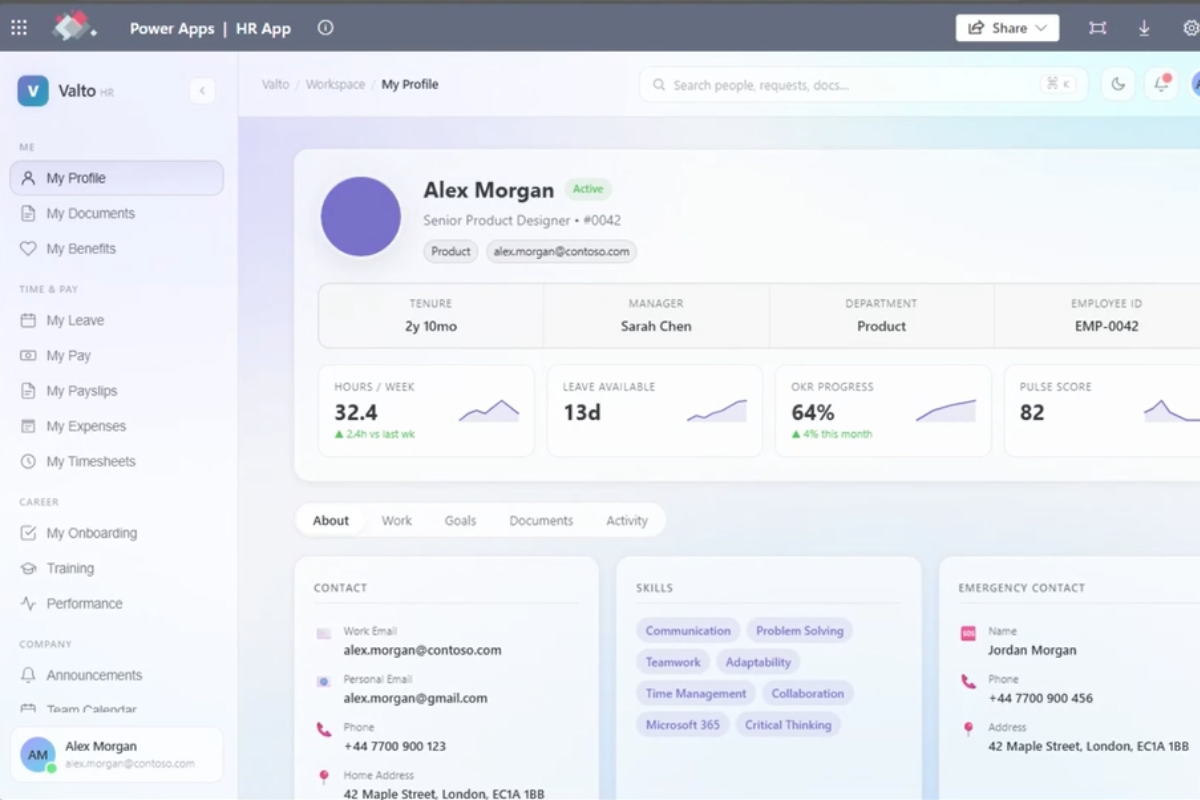
A Power Apps HR Portal provides employees with a single location to access documents, update information, submit requests, and find answers themselves.
Whether accessed via Microsoft Teams, a browser, or a mobile device, employees get the information they need without having to email HR.
4. Create a Single Source of Truth
One of the biggest challenges HR teams face is fragmented data.
Employee records might live across SharePoint, spreadsheets, emails, payroll systems, and shared drives. Reporting becomes time-consuming and data accuracy becomes difficult to maintain.
Using Microsoft Dataverse, organisations can centralise employee data within a secure, structured environment that sits inside their Microsoft ecosystem.
Employee records, leave history, onboarding progress, documents, and approval activity can all be managed from a single source, improving accuracy, reporting, and governance.
5. Scale Without Expensive Modules
Many HR platforms require organisations to purchase additional modules whenever new functionality is needed.
With Power Platform, you can start with the essentials and expand over time.
Perhaps your first phase focuses on leave management and employee records. Later, you might add onboarding, HR case management, expenses, employee recognition, or integration with existing payroll systems.
The platform grows with your business rather than forcing you into new licensing commitments every time requirements evolve.
What Can a Power Apps HR Portal Include?
The biggest advantage of a custom HR portal is flexibility. Functionality can be tailored to your exact requirements, but common features often include:
Leave Management
- Employees can view entitlements, check remaining balances, submit leave requests, and track approvals from a single location.
Expense Management
- Claims can be submitted online with receipts attached, creating a streamlined approval process and a clear audit trail.
Employee Document Management
- Payslips, contracts, pension documents, policies, and P60s can be securely stored and accessed on demand.
HR Case Management
- Employees can raise queries directly with HR, track progress, and maintain a record of conversations in a structured system rather than relying on email chains.
Employee Onboarding
- New starters can follow guided onboarding journeys, complete required tasks, and access important information from day one.
Employee Recognition
- Recognition programmes can be incorporated into the portal, helping organisations celebrate achievements and reinforce company culture.
What Does a Power Apps HR Portal Cost?
For organisations already using Microsoft 365, the investment required to build an HR portal is often lower than expected.
Simple solutions can sometimes leverage existing Microsoft licensing, while more advanced applications may require Power Apps Premium licensing and Dataverse.
Unlike subscription-based HR platforms, where costs continue indefinitely, a custom Power Apps solution is an asset your organisation owns and can continue developing over time.
The result is often a stronger return on investment, particularly for organisations that require flexibility and want to avoid paying for unused functionality.
Is Power Apps Right for Your HR Function?
If your HR team is spending too much time managing manual processes, answering repetitive enquiries, and working across disconnected systems, a Power Apps HR Portal could provide a smarter alternative.
By combining Power Apps, Power Automate, Dataverse, Microsoft Teams, and Microsoft 365, organisations can build a modern employee experience that streamlines administration, improves visibility, and supports future growth.
Instead of adapting your business to fit the software, you can create an HR platform built specifically around the way your organisation works.
How Valto Can Help
At Valto, we help organisations design and build custom HR portals using Microsoft Power Platform, tailored to the way their business operates. Rather than forcing your HR processes into an off-the-shelf solution, we work with you to understand your requirements, identify opportunities for automation, and create a secure, scalable portal that fits seamlessly within your existing Microsoft 365 environment. Whether you're looking to digitise leave management, streamline onboarding, centralise employee data, or create a complete employee self-service experience, our specialists can help you turn Power Apps, Power Automate, and Dataverse into a solution that delivers real business value. From initial discovery and scoping through to build, optimisation, and ongoing support, we help organisations get more from the Microsoft technology they already own.
Ready to modernise your HR processes?
Whether you’re looking to automate leave requests, streamline onboarding, improve employee self-service, or replace spreadsheets with a centralised HR portal, our Power Platform specialists can help you build a solution that fits your organisation.
Microsoft Services Trusted by Leading Brands
“We work with organisations across many sectors of different shapes and sizes from 10 to 100,000 employees.”
Talk to our team
Stuck on Access? Contact Valto
Related reading

EventAI & Automation
What’s next? How data, automation & AI are reshaping business
17 November 2026 · 11:00 · 20 Stories, Manchester

NewsAI & Automation
Valto and Holstein UK launch major multi-year digital transformation programme
New partnership will modernise core systems and create a connected, data-driven platform powered by Microsoft technologies.
6 October 2026