


EventAI & Automation
How your business can leverage data, automation & AI to get ahead
13 October 2026 · 11:00 · Corrigan's Mayfair, London

Podcast

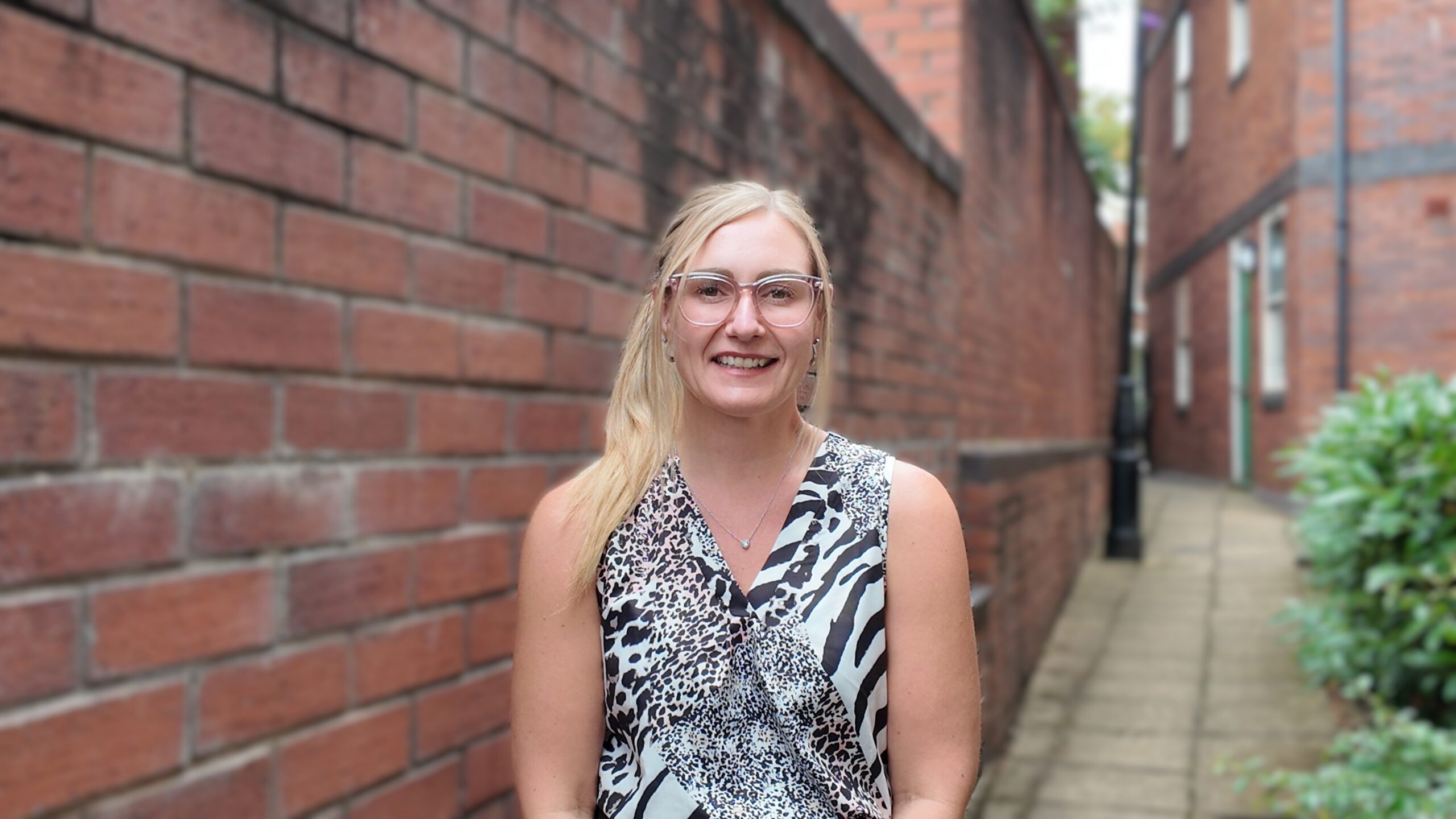
Hear from our experts
In this episode, Valto's Azure specialists discuss the key themes emerging from recent Microsoft-hosted events in London and Manchester, covering everything from Azure cost optimisation and governance to security, landing zones, managed services, and Azure AI Foundry. Whether you're looking to modernise legacy infrastructure, improve Azure governance, strengthen cloud security, or prepare your environment for AI adoption, this episode provides practical guidance and real-world examples from organisations already making the journey.
Be the first to hear about our latest podcast episodes, videos, news and more.
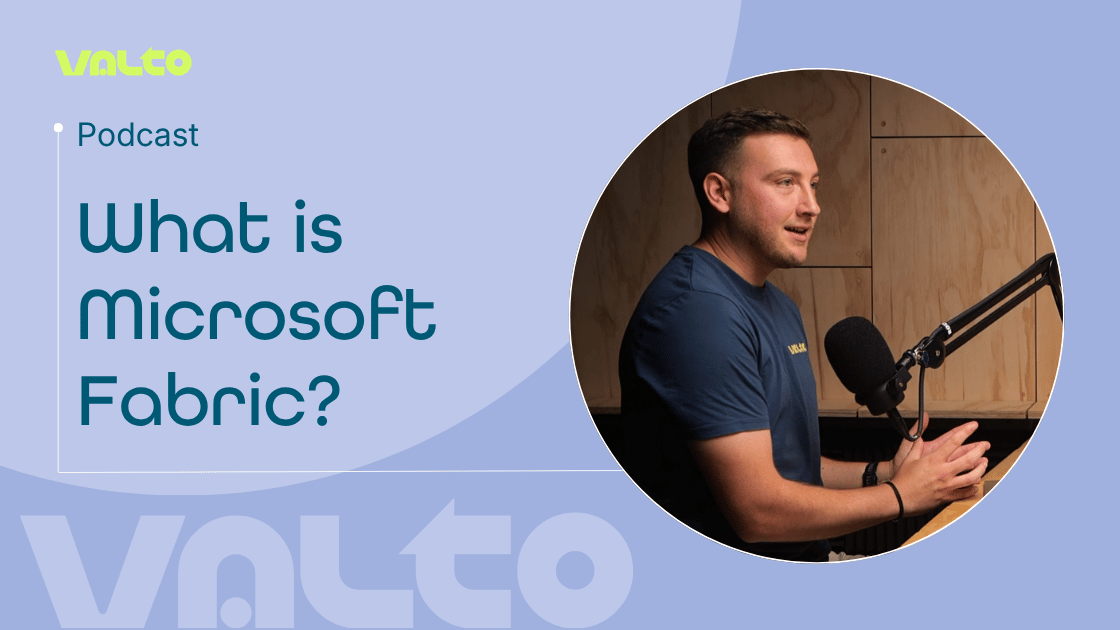
Whether you're looking to improve reporting, bring together data from multiple systems, create a single source of truth, or lay the foundations for AI adoption, this episode provides practical insights and real-world examples from organisations already using Microsoft Fabric to transform how they work with data.
Hugh: Welcome to the Valto Podcast. Today, we’re discussing Microsoft Fabric, and I’m joined by Dena and Sam.
Sam is one of our pre-sales experts and works across our Business Applications offering. Sam, would you like to introduce yourself?
Sam: I’m Sam. I work across the Business Applications and Data & AI business units. I get involved in conversations around automation, helping organisations get more value from their data, and exploring how AI can support business processes.
Hugh: Thank you, Sam. Dena?
Dena: I’m Dena, and I lead the Business Applications, Data & AI business unit here at Valto. My role focuses on aligning sales activities, overseeing project delivery, managing business unit operations and supporting stakeholder relationships.
Hugh: Many organisations still aren’t sure what Microsoft Fabric is. A lot of the enquiries we receive are related to data.
AI has seen a huge surge in interest, with businesses increasingly asking how they can make greater use of it. However, the starting point is often understanding what their data currently looks like.
Sam, what types of enquiries are you seeing?
Sam: A common challenge is that organisations have data spread across multiple systems. The data exists, but it’s siloed, making reporting and gaining insights difficult.
Many businesses aren’t sure where to begin. Some have heard of Microsoft Fabric, while others haven’t. Our role is to help them understand what it can do and how it can support their business goals.
Hugh: Dena, you’re spending a lot of time with customers reviewing their data estates.
Dena: Definitely. Customers come to us with challenges around Microsoft Access databases, large Excel-based processes, legacy systems, duplicate data or simply too much unmanaged data. They often need a significant clean-up exercise before they can move forward.
Introducing Microsoft Fabric helps customers understand what’s possible and gives them greater insight into how they can better manage and utilise their data.
Hugh: It also lends itself well to AI. Having structured, accessible data creates opportunities to use AI more effectively. Organisations can ask questions of their data, identify trends and even generate dashboards.
That’s one of the reasons why conversations around Microsoft Fabric have increased.
Microsoft is also placing significant emphasis on data. Organisations are being encouraged to move away from spreadsheet-based processes and legacy systems, organise their data properly and create the foundations needed for AI.
That leads us nicely into the next question. Sam, what is Microsoft Fabric?
Sam: For a non-technical audience, I usually describe Fabric as a platform that brings data from many different locations into a single place.
Once all the data is together, you can build relationships between different datasets and gain much deeper insights.
Fabric also includes tools such as Microsoft Copilot, which can help people who aren’t data engineers or data scientists build workflows, analyse information and work with data more effectively.
Hugh: That’s a great explanation. For a more technical audience, Microsoft Fabric is essentially a modern data warehousing platform.
Historically, if you wanted to build a data warehouse, you needed numerous individual components. You would need data storage, a data lake, data-ingestion tools, virtual machines, servers and a variety of licences to make everything work together.
It was a significant undertaking, and for many small and medium-sized organisations, it was simply too expensive.
Microsoft Fabric changes that by providing a Software-as-a-Service platform that brings these capabilities together in one place. It covers data storage, engineering, modelling, science, analytics and data flows within a single environment.
Rather than purchasing and maintaining individual systems, organisations can use a single platform with a tiered pricing model.
Sam, could you explain how the licensing works?
Sam: Fabric licensing is based on capacity, which means organisations pay for the level of processing power they require. That capacity is managed through Azure subscriptions, making it easier to monitor and control spending.
The tiers start at F2 and increase through F4, F8 and beyond, with each tier providing additional capacity.
The benefit is that organisations only purchase what they need at the time. We can also help customers estimate their expected costs before they commit.
This works particularly well for organisations that are new to the platform. They can begin with a proof of concept, demonstrate value and then gradually scale as their requirements increase.
Hugh: I think that’s one of the biggest benefits. When customers see all their data brought together into a central platform, it gives them confidence that their data is finally in a position where it can be used effectively across the business.
Sam: Absolutely. Beyond being a data warehouse, Fabric includes a range of advanced capabilities that a traditional data warehouse may not have.
For example, its data science capabilities can analyse information, identify trends and uncover patterns that organisations may not have spotted themselves.
On top of that, we can introduce AI and Copilot functionality, allowing users to build reports, ask questions of their data and generate meaningful insights. It’s an extremely powerful platform.
Hugh: We see a lot of organisations approach us because they’re experiencing data challenges. They don’t necessarily know what Fabric is, but it often turns out to be the right solution.
Can you talk a little more about those typical challenges?
Sam: Most of the time, the issues are around reporting. Reporting processes can take a long time, organisations are heavily reliant on Excel spreadsheets, or they’re struggling to trust the data they have.
Often, the data lives in multiple systems, making it difficult to access and analyse. As a result, leadership teams struggle to identify trends or make data-driven decisions.
The conversation usually starts with a lack of confidence in the data. Once we’ve identified the challenges, we can explain how a platform such as Microsoft Fabric can help solve those problems.
Hugh: Another advantage of Fabric is how easy it is to get started. Because it’s available through Azure, we can quickly create proof-of-concept environments.
That’s something your team does regularly, isn’t it, Dena?
Dena: Yes, absolutely. Proof-of-concept projects are a practical way for organisations to experience the value of the platform before committing to a larger programme of work.
Once customers can see the value for themselves, they often want to do more and expand the solution over time.
I also think customers build trust in Valto throughout that process. We regularly work with organisations that rely heavily on large Excel spreadsheets, sometimes owned by only one or two individuals across the entire business.
That can introduce significant business risk because all the knowledge sits with a very small number of people.
Once organisations recognise that risk and begin working with us, we can support them through multiple stages of their transformation journey.
Hugh: Let’s look at some real examples.
One of my favourite Fabric projects involved an electric vehicle charging installer. They wanted to bring together a variety of different data sources.
They had their own information about charger locations and usage. They also wanted to bring in publicly available information about competitor charging networks through APIs.
On top of that, they wanted to include demographic and weather data.
The objective was to create a Fabric-powered reporting solution that could identify the best locations in the UK to install new charging points.
It analysed competitors, customer demographics, existing utilisation data and a range of external factors.
Using AI modelling, the customer could identify gaps in the market and make much more informed investment decisions.
That was a really interesting project, wasn’t it, Sam?
Sam: Definitely. From the customer’s perspective, the project demonstrated a clear return on investment.
By bringing all that information together, they were able to make much better decisions about future growth.
The project could also be delivered in phases. We could focus on the data first and introduce the reporting later. That made the journey easier to manage and allowed the customer to realise value incrementally.
Hugh: Sam, can you share another example?
Sam: Another interesting use case involved a private equity-backed organisation growing through mergers and acquisitions.
As it acquired businesses, it inherited multiple CRM systems and data sources across more than 20 organisations.
The organisation wanted to consolidate all that data into a central platform so it could improve financial reporting, gain visibility across the group and understand the value being generated through each acquisition.
Microsoft Fabric gave it a single location for the data, which helped the business produce stronger insights and support future acquisition strategies.
Dena: Another project involved an existing customer that wanted to bring together multiple systems, including its internal systems, Dataverse and several external APIs.
The goal was to create a single customer-facing portal where information could be accessed more easily.
Microsoft Fabric sat at the centre of the solution. Once the data had been prepared and structured within Fabric, we developed extensive Power BI reporting for the finance department.
The reports were large and complex, but we designed them so they could be updated easily and additional data could be extracted to support future reporting.
Sam: One of the really interesting aspects of that project was the Power Pages element.
Customers could sign in and access reports tailored specifically to them. It was a great example of how Fabric can support both internal reporting and external customer experiences.
Hugh: One of the key strengths of Fabric is that it can connect to many different data sources.
In one project, there wasn’t a traditional API available, yet we were still able to bring the information into the platform.
Once data is connected, Fabric allows you to model relationships between different datasets and uncover insights that may otherwise remain hidden.
For example, one customer believed its typical customer was aged between 40 and 50.
Once the organisation connected its membership data and analysed it within Fabric, it discovered that customers in their twenties were actually its highest spenders.
That insight changed its marketing strategy. Instead of focusing primarily on one audience segment, the organisation redirected activity towards a demographic it hadn’t fully appreciated before.
That allowed it to approach marketing differently and helped generate additional revenue.
Sam: That’s also where technologies such as Microsoft Foundry and AI agents begin to become important.
One of the biggest challenges with AI is poor-quality data. If the underlying data isn’t structured properly, the outputs won’t be reliable.
When organisations build strong data foundations using Fabric, it becomes much easier to introduce AI agents and more advanced automation.
The quality and structure of the data allow those solutions to perform more effectively.
Dena: Exactly. Microsoft Fabric provides the data foundation. Once that foundation is in place, the wider AI solution becomes possible.
Hugh: If an organisation wants to explore Microsoft Fabric, it all starts with a discovery call.
Sam, can you explain what that process looks like?
Sam: The first step is understanding the customer’s challenges and objectives.
We discuss what the organisation is trying to achieve, the issues it’s facing today and what success would look like.
From there, we can begin building a plan and providing guidance on likely project and licensing costs.
It’s a free, one-hour consultation designed to help organisations understand their options. We want to be as transparent as possible about both the project costs and the ongoing licensing costs.
After that, we typically move into one of our specialist workshops.
Hugh: The first of those is our Envisioning Workshop.
This is an education-focused session where we help organisations understand what Fabric is, how it can be applied within their business and how other organisations in their sector are using it.
It’s designed to identify opportunities and use cases before any technical work begins.
The workshop helps customers understand how Fabric could be rolled out and where the strongest use cases sit within their business.
Hugh: We also offer a New App Scoping Workshop. Sam, can you explain that option?
Sam: The New App Scoping Workshop is for organisations that already know they want to use Fabric and have a clearer idea of what they want to achieve in the first phase.
We’ll review the different data sources, reporting requirements, business processes and technical objectives.
The outcome is a detailed scope that allows us to define the project accurately and provide a fixed-price proposal.
Hugh: The third option is our Microsoft Fabric Health Check. Dena, can you explain what that involves?
Dena: One of our consultants reviews the existing Fabric environment, examines how it’s configured and identifies potential issues or risks.
We’ll look at the platform setup, assess the data architecture and identify common issues based on what we’ve learned from previous projects.
The goal is to provide organisations with an independent assessment of their Fabric environment and practical recommendations for improvement.
Hugh: One of the most common challenges we see is cost management.
As Fabric capacity increases, the cost can rise significantly if environments aren’t managed effectively. We’ve seen organisations whose Fabric costs began at a relatively low level but later grew to tens of thousands of pounds.
Through the Health Check, we can identify opportunities to optimise data flows, reduce data sizes, improve performance and bring costs back under control.
At the end of the engagement, customers receive a report outlining our findings and recommendations.
Dena: I think that’s one of the key benefits. We’re not just reviewing the technology. We’re also documenting everything along the way.
That gives organisations a fresh perspective on their data environment and creates documentation they can circulate across the business to other stakeholders and data owners.
Hugh: To summarise, everything starts with discovery.
We first understand what you’re trying to achieve and provide guidance around budgets and expected outcomes.
From there, organisations typically move into one of three areas.
The Envisioning Workshop is focused on education, understanding how Fabric could be used and identifying relevant business use cases.
The New App Scoping Workshop is for organisations with a clear requirement that need support defining how it should be built and priced.
The Microsoft Fabric Health Check is for organisations that are already using Fabric but are experiencing uncontrolled costs, technical issues or results that don’t meet their expectations.
Those are the three main ways we help organisations get started with or improve Microsoft Fabric.
Hugh: That concludes our overview of Microsoft Fabric.
We’ve created a wide range of Microsoft Fabric resources, demonstrations and deeper-dive sessions, many of which are available on our YouTube channel. Sam has hosted several of those sessions, where we explore the platform in more detail.
Thank you both for joining me today, and thank you for listening.
We’ll see you next time.
13 October 2026 · 11:00 · Corrigan's Mayfair, London